
Built for small childcare programs.
- Onboarding new hires and training volunteers
- Managers' daily walk-throughs and parents at drop-off
- No trainer pulled away from the children
Safety training without the lecture.
A self-paced activity where new hires, volunteers, and managers scan a preschool classroom and an outdoor play yard, find every hazard, and learn why it matters and how to fix it, with instant feedback on every choice.
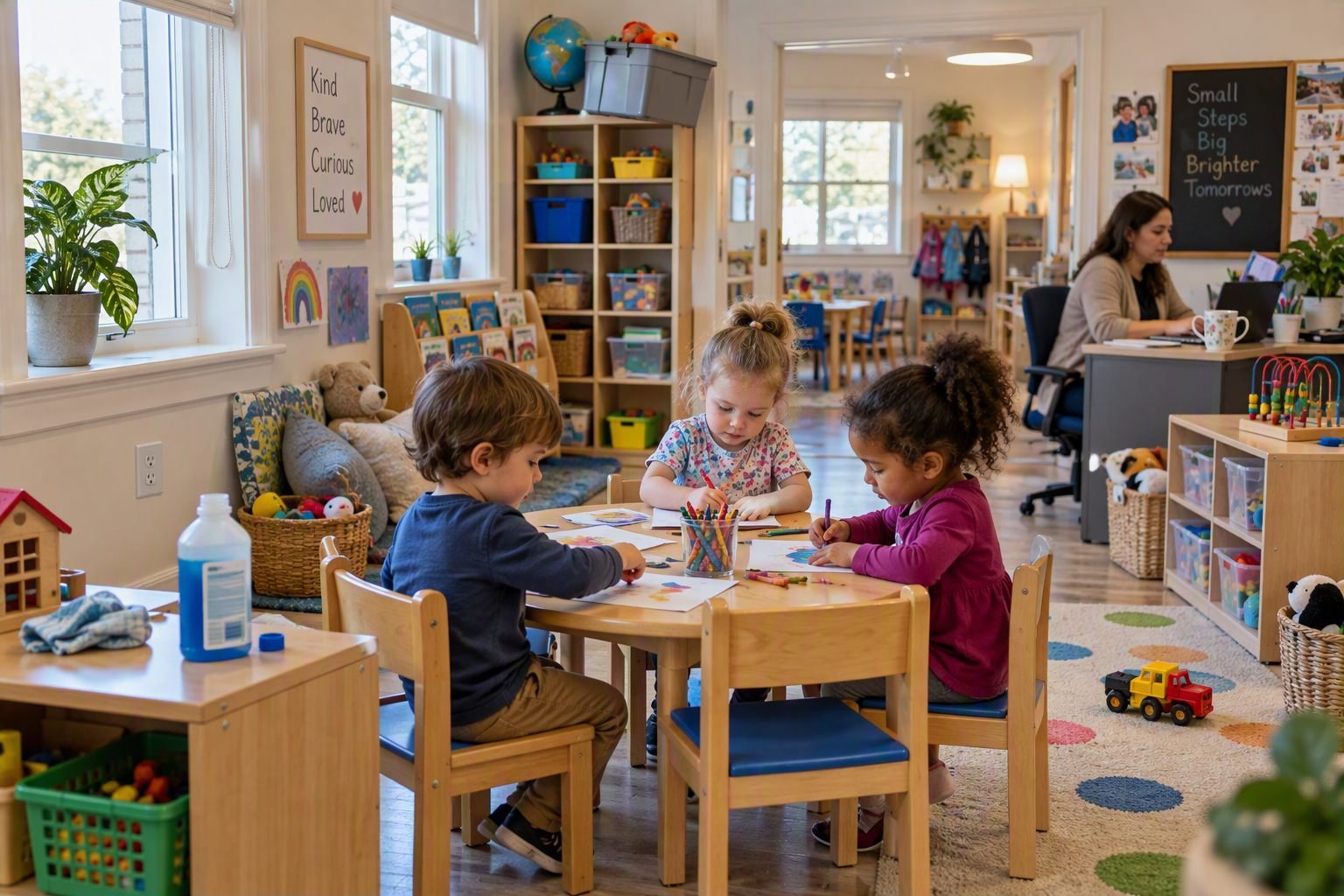
Scene 1: the preschool classroom. How many hazards can you find?
Safety concerns identified during routine childcare operations revealed an opportunity to improve awareness and prevention through targeted training. In response, this self-paced learning solution was developed to equip new employees and volunteers with the knowledge and confidence to recognize hazards, reduce risk, and support child safety standards across the program.
Trainer-led lectures and checklists. Time-intensive for both people, and passive for the learner.
Independent, self-paced practice that builds the habit of scanning a space, with feedback on every decision.
Anyone caring for small children needs to see a room from a toddler's point of view.
Step 3 is the turning point.
See the room from a toddler's point of view: low, curious, and fast.
The idea behind the activity
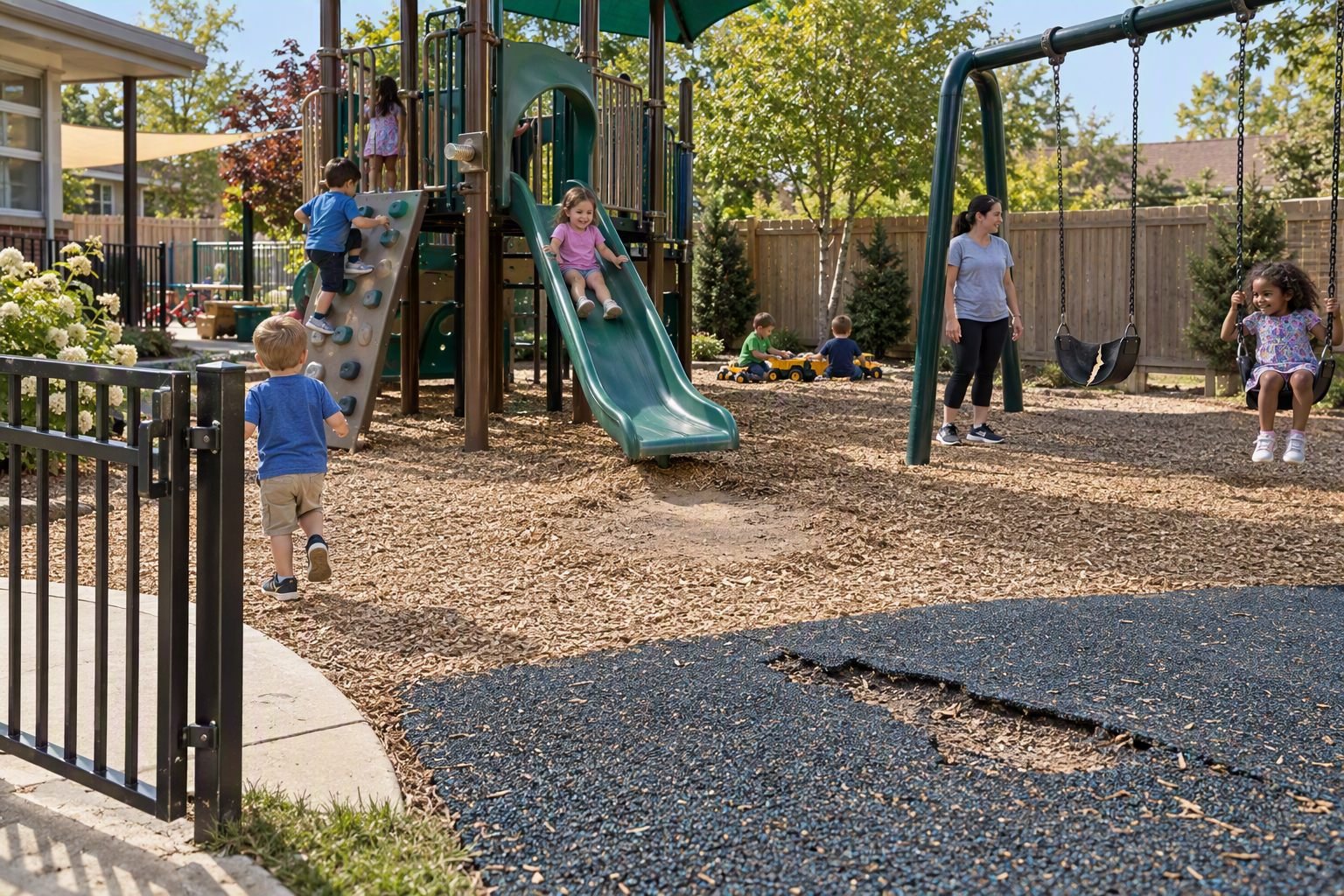
I designed the experience and wrote every hazard and its feedback. AI tools built and illustrated what I directed.
Learning strategy & design
At my direction
| # | Decision | Why |
|---|---|---|
| 1 | Make it self-paced, with no trainer needed | Lectures take a trainer and a new hire away from the children |
| 2 | Learn by finding, not listening | Spotting a hazard yourself sticks better, and it's the skill a walk-through needs |
| 3 | Add safe look-alikes that count as a miss | Learners can't click everything; they have to tell real risk from a safe setup |
| 4 | Give immediate feedback: why it matters and what to do | Feedback at the moment of decision turns a click into a lesson |
| 5 | Require mastery before the next scene | No one finishes with a hazard they missed |
| 6 | Aim for analyze and evaluate on Bloom's taxonomy | Judgment transfers to hazards that aren't in the scenes |
Try it with new staff and volunteers, and use first-try accuracy to see which hazards are most often missed.
Planned next: workplace, construction, and auto shop safety, built the same way.
Built with AI at my direction, and disclosed. How I use AI
I'd love to hear about your team and the skills they need to practice, not just hear about.
Let's talk