A Senior VP of Operations asked for a more “interactive” course. Needs analysis reframed the real problem as a missing learning architecture — resulting in a six-unit modular framework, a course dashboard, and a full evaluation plan.
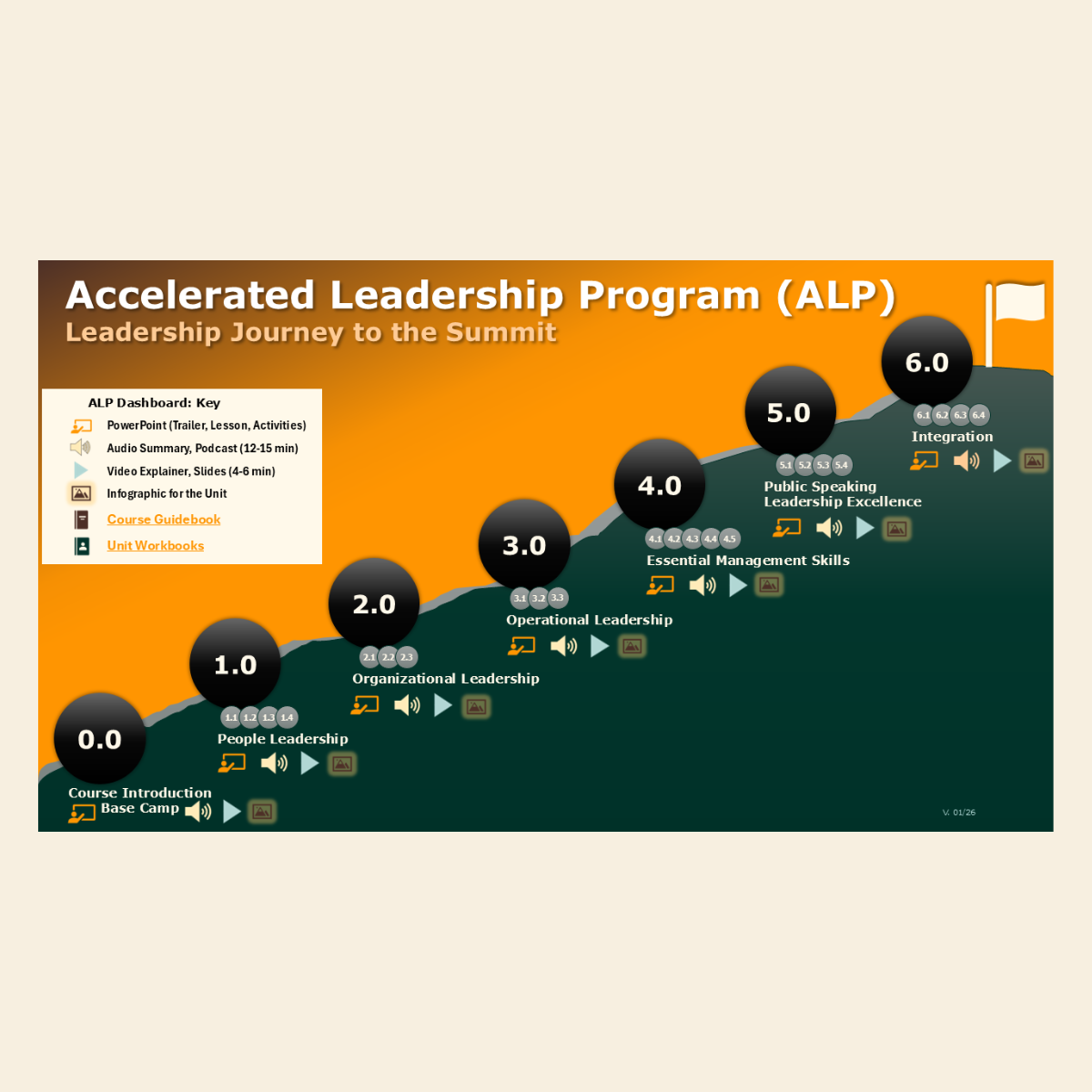
The redesigned course dashboard — six units, mapped as a journey to the summit.
Needs analysis with the sponsor and SMEs surfaced a different problem than the one requested.
Make the existing 100+ slide leadership deck “more interactive.”
No learning architecture. Content was a linear information dump with no pathway, practice, or measurement.
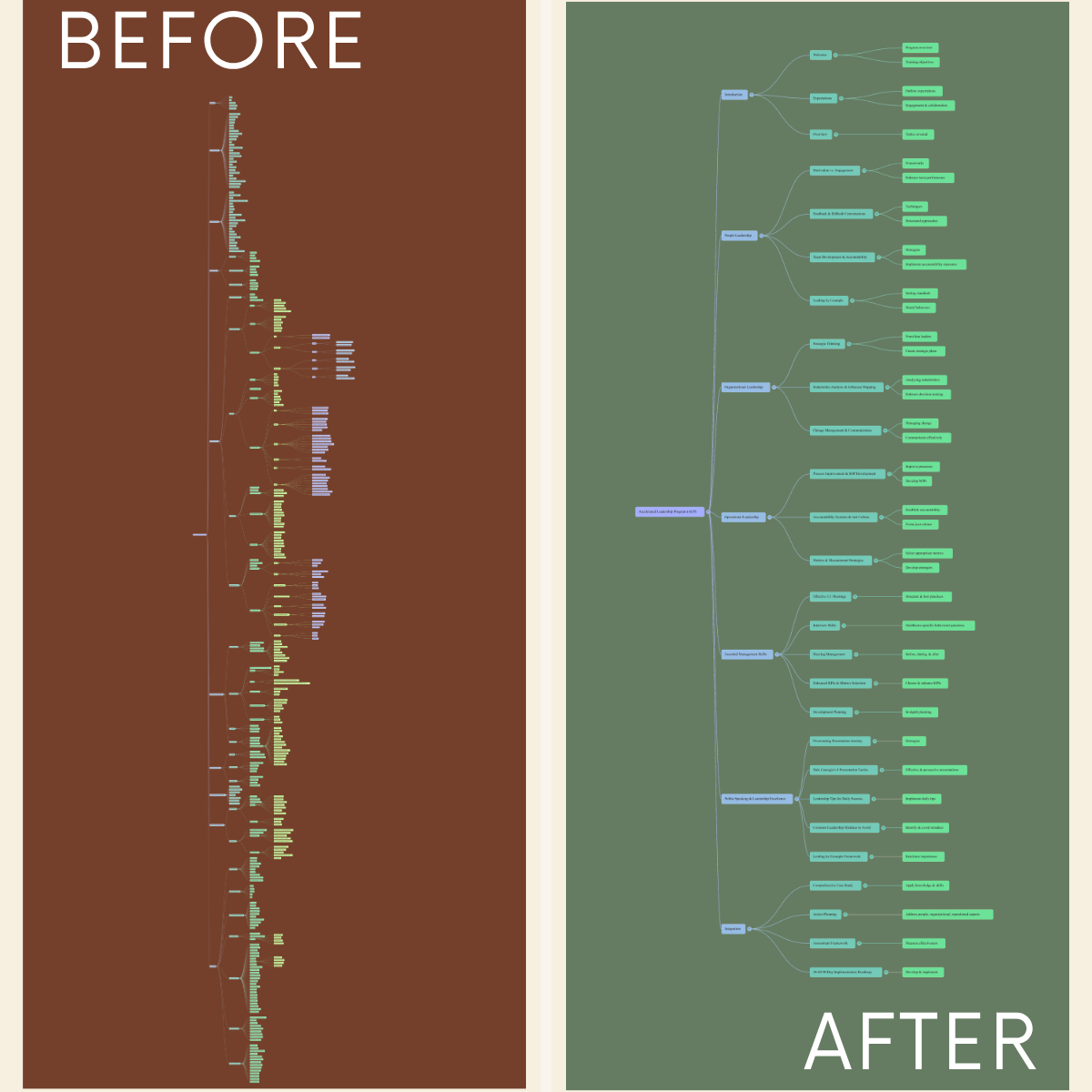
Diagnosis and design decisions, side by side.
Want to see the design thinking up close? Walk through Unit 3.0 module by module, with clickable practice scenarios.
An assessment framework plus ADDIE stages guided the reframe and rebuild.
Interviewed the sponsor and SMEs, mapped content against leadership competencies, and identified missing practice and evaluation layers.
Designed a climb — People → Organizational → Operational → Essential Management → Public Speaking → Integration — each with clear objectives, modalities, and success criteria.
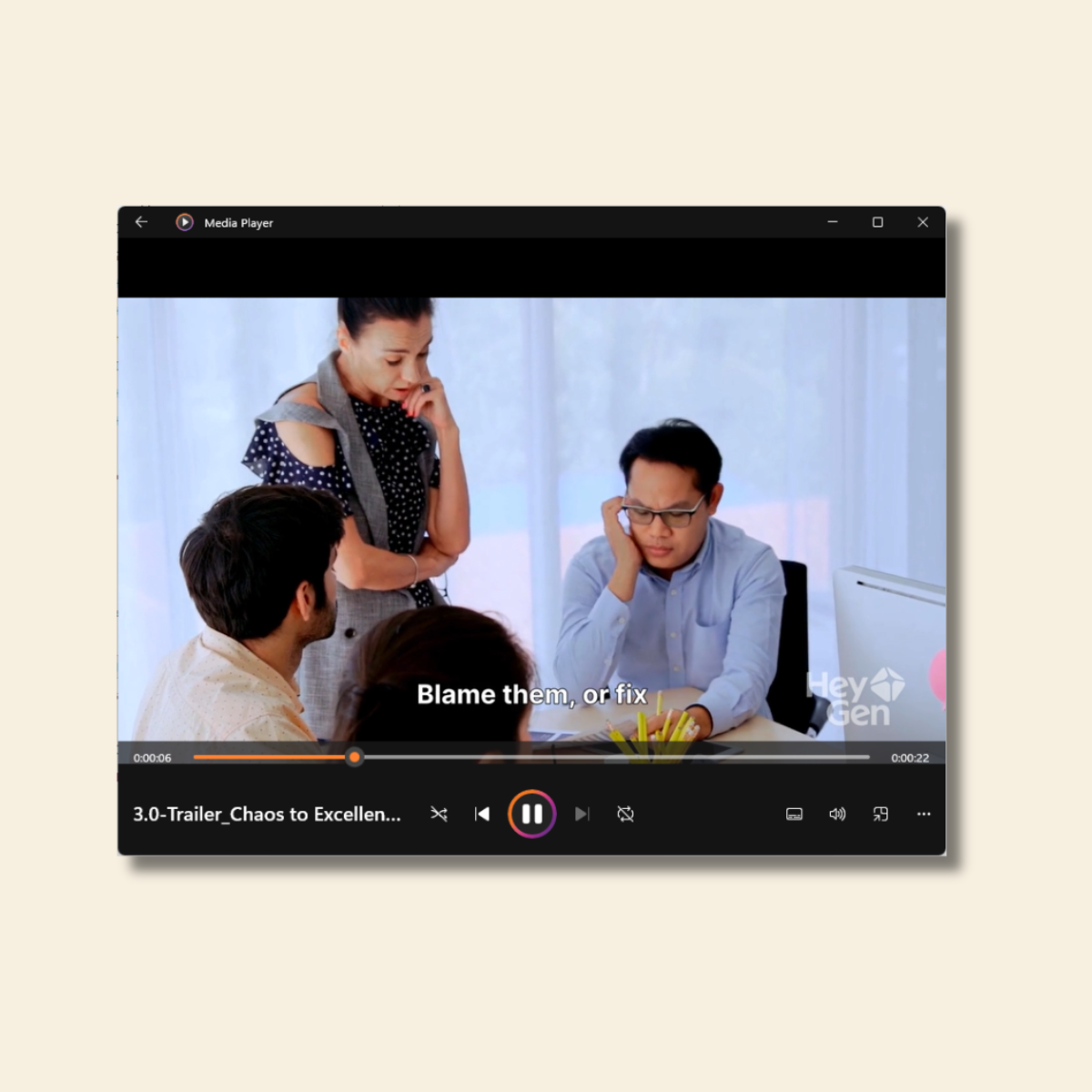
Built scenarios, video trailers, audio summaries, a resource guide, and a visual dashboard mapping the full journey.
Partnered with trainers and regional teams on train-the-trainer rollout, so the system landed in the flow of work.
Defined Kirkpatrick-aligned measures and a plan for ongoing iteration.
The choices below reflect an anticipative approach — mapping the learner's path first, then designing to remove friction before it happens.
Replaced the single linear deck with a sequenced pathway, foundational → advanced.
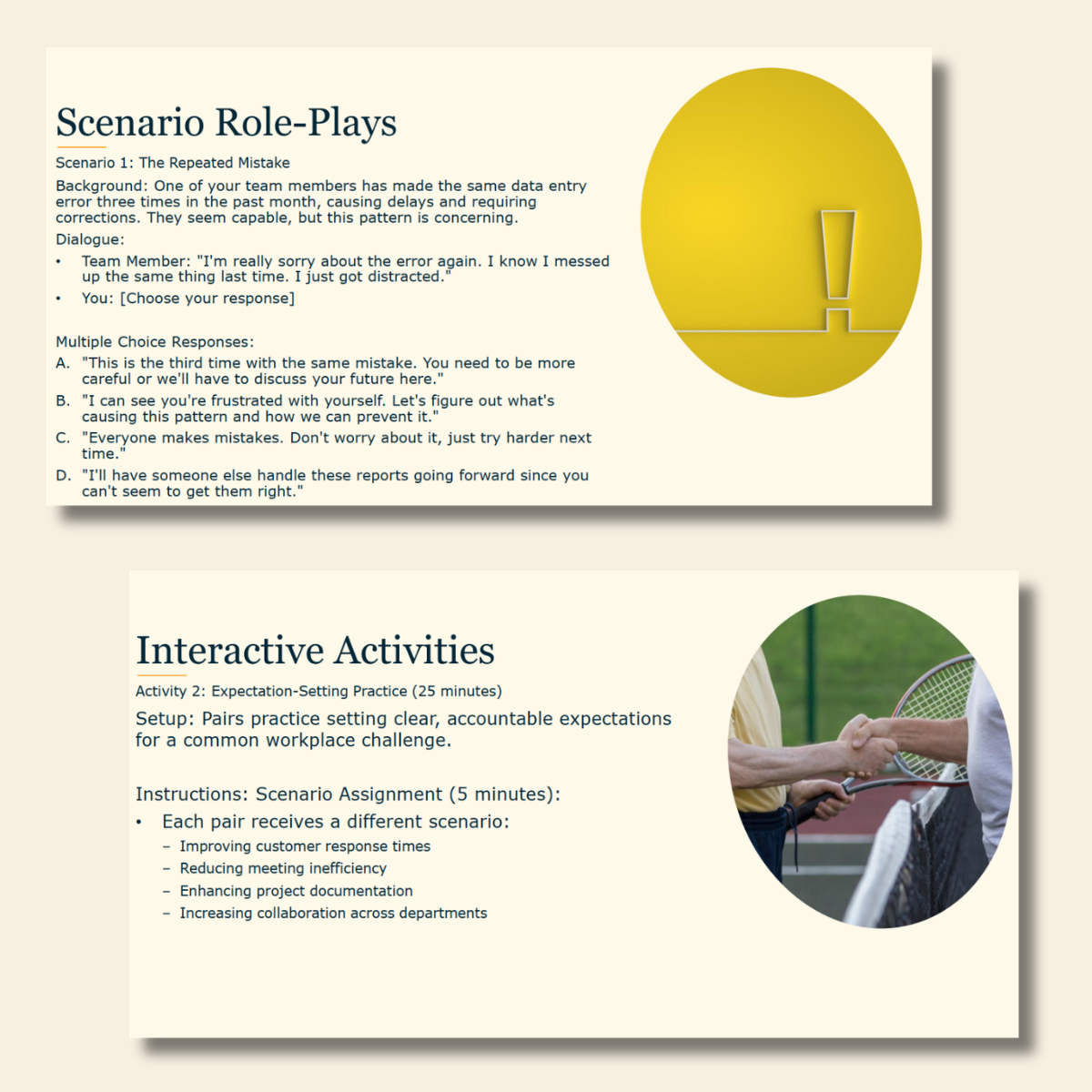
Why: Closed the "no coherent pathway" gap surfaced in analysis.Added scenario-based activities, like "Opening the Conversation" and "Responding to Resistance," instead of passive slides.
Why: Busy operational leaders needed practice, not more content to read.Designed a "Leadership Journey to the Summit" dashboard linking the trailer, lesson, activity, audio, and guidebook for every unit.
Why: Let learners and the SVP sponsor see the whole journey and track progress at a glance.Delivered every unit as video, audio, print, and scenario, not slides alone.
Why: Regional rollout meant different schedules and devices; multimodal design maximized the odds the training actually landed.Click any piece to view it larger.

I'd love to hear what you're working on and whether a bridge-first approach like this one could help.
Let's talk