A hands-on look at one unit from the Accelerated Leadership Program: the agenda, the job aids leaders take away, and two clickable practice scenarios per module. Try the scenarios below — pick a response and see the reasoning behind the recommended approach.
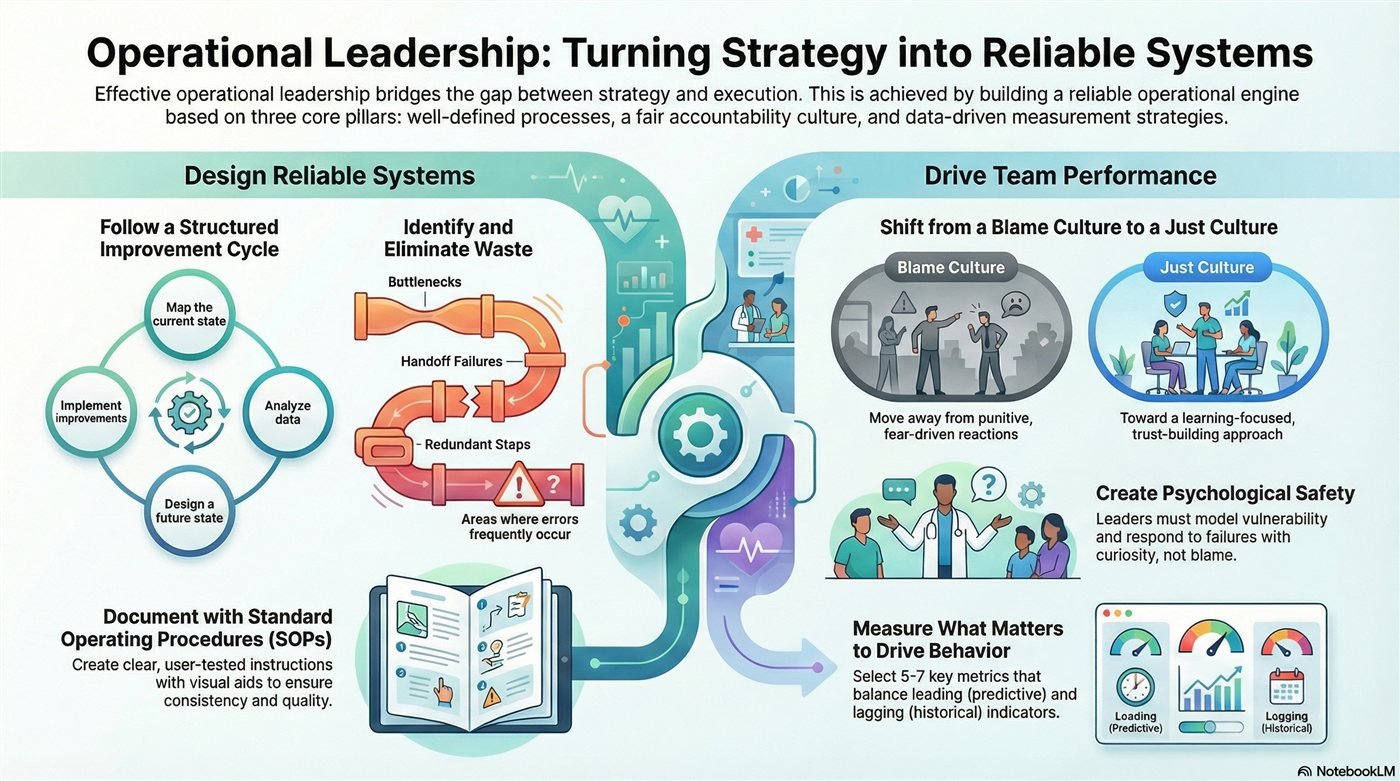
The three pillars covered in this unit: reliable systems, a just culture, and metrics that drive behavior.
This unit is one of six in the full program. It focuses on the systems side of leadership: fixing broken processes, building fair accountability, and measuring what actually matters.
| Module | Time | Purpose | Interaction |
|---|---|---|---|
| 3.1 Process Improvement & SOP Development | 40–45 min | Improve workflows; document with SOPs | Poll + Whiteboard + Breakout |
| 3.2 Accountability & Just Culture | 40–45 min | Balance fairness with high standards; build psychological safety | Scenarios + Role-play |
| 3.3 Metrics & Measurement Strategies | 40–45 min | Select SMART+ KPIs; design dashboards; drive decisions | Breakouts + Design challenge |
For those who can't attend, or as a refresher.
Where this unit sits in the full six-unit Accelerated Leadership Program.
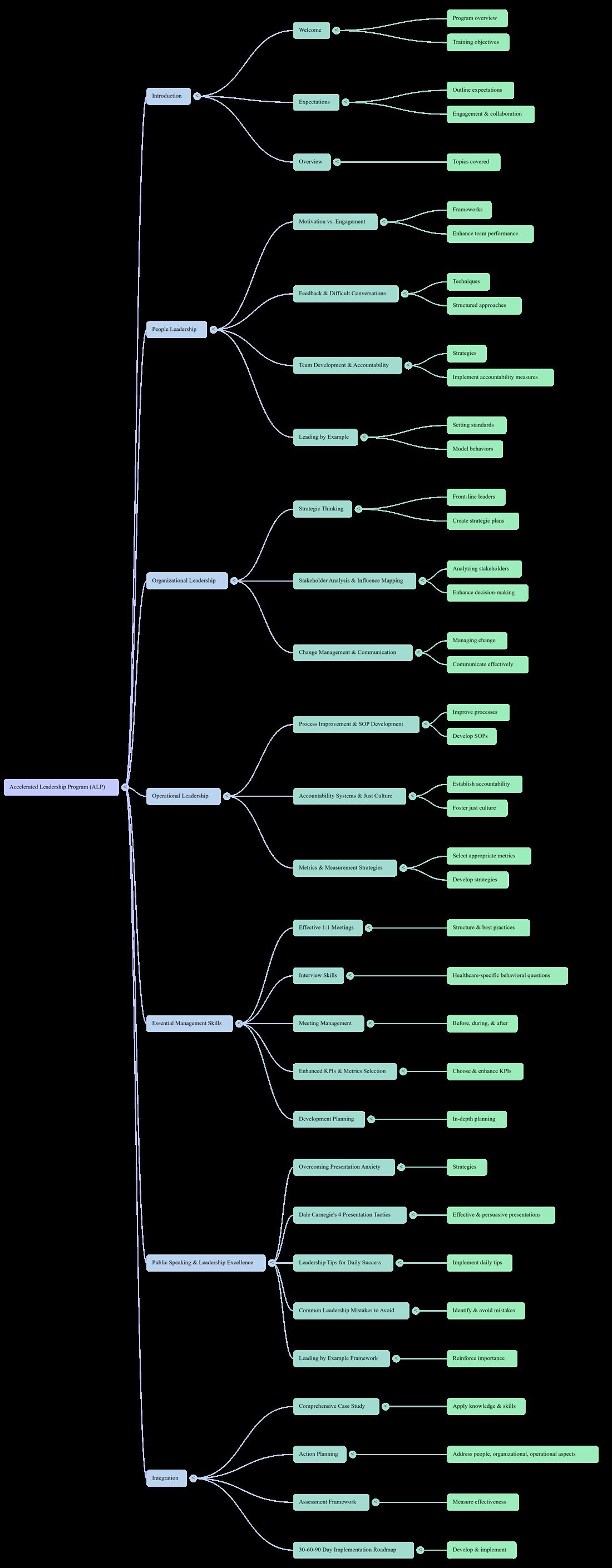
Select a module to see its accompanying job aid, scenario, and activity.
Transform operational efficiency through systematic improvement. Develop clear, actionable standard operating procedures. Create sustainable frameworks for continuous enhancement.
Sample use: Pilot change → measure → analyze → improve → control.
Go ahead and click your answer to see the reasoning behind it.
You're a department manager noticing that simple purchase requests are taking weeks to process due to multiple approval layers. Your team is frustrated, and vendors are complaining about delayed payments.
"I submitted that software request three weeks ago and it's still sitting in approvals. The vendor is threatening to cancel our discount."
How do you respond?
This demonstrates process improvement thinking by investigating the current state before making changes.
You've developed new SOPs for your team's key processes, but several experienced employees are resistant to following them, claiming they slow things down.
"These SOPs are ridiculous. I've been doing this job for 10 years. I don't need a checklist to tell me how to do my work."
How do you respond?
This acknowledges the employee's expertise while engaging them in the improvement process.
Select an activity to see more.
Each team selects a common workplace process (e.g., onboarding, expense reports, customer complaints).
Debrief: each team presents their before/after maps and key insights.
Pairs select a simple but important process from their workplace.
Debrief: common challenges and best practices discovered.
Balance accountability with psychological safety. Create systems that drive performance and learning. Build trust while maintaining high standards.
Sample case: time pressure + unclear SOP → classify as at-risk → coach + fix the SOP.
Go ahead and click your answer to see the reasoning behind it.
One of your team members has made the same data entry error three times in the past month, causing delays and requiring corrections. They seem capable, but this pattern is concerning.
"I'm really sorry about the error again. I know I messed up the same thing last time. I just got distracted."
How do you respond?
This response balances accountability with support, focusing on problem-solving rather than blame.
An employee approaches you with concerns about a colleague who they believe is cutting corners on safety procedures to meet deadlines. The colleague is one of your top performers, and the deadline pressure is real.
"I'm uncomfortable coming to you with this, but I think a colleague is skipping some of the safety checks to get projects done faster. I'm worried someone could get hurt."
How do you respond?
This response encourages reporting, takes the concern seriously, and commits to action without prejudging the situation.
Select an activity to see more.
Groups classify 6 workplace scenarios (late arrivals, a misdirected email, falsified reports, a coding error, an ignored safety protocol, a struggling new hire) using Just Culture principles.
Debrief: how different interpretations lead to different responses — gather facts before responding.
Pairs practice setting clear, accountable expectations for a common workplace challenge (response times, meeting efficiency, documentation, or cross-department collaboration).
Debrief: what made expectations clear vs. confusing, and how the approach affected buy-in.
Transform data into actionable insights. Select metrics that drive the right behaviors. Build measurement systems for operational success.
Sample KPI: ≥90% of follow-up calls completed within 48 hrs; owner RN; reviewed weekly.
Go ahead and click your answer to see the reasoning behind it.
Your team currently tracks 23 different metrics across various reports and dashboards. Team members complain they spend more time reporting than working, and you're not sure which metrics actually matter for decision-making.
"I spent three hours this morning updating all these different reports with metrics I'm not even sure anyone uses. When do I get time to actually improve our processes?"
How do you respond?
This focuses on strategic metric selection rather than just efficiency improvements.
You've noticed that since implementing a customer response time metric, your team's numbers look great — but customer satisfaction scores have actually declined. You suspect people are focusing on speed over quality.
"Our response times are the best they've ever been! We're hitting our targets consistently."
How do you respond?
This opens dialogue about unintended consequences without immediately blaming the team member.
Select an activity to see more.
Participants work with their actual current metrics from their workplace.
Teams design a one-page dashboard for a rotating scenario (customer service, manufacturing operations, sales performance, or IT service delivery).
Debrief: peer feedback on clarity and usefulness.
I'd love to hear what you're working on and whether a bridge-first approach like this one could help.
Let's talk